
HM-HETZELMEDIA
Von: H. HETZEL, Den Haag
Datum: 25.9.2026
Niederlande/China/Taiwan/ASML
English Version please see below
„ASML ist ein neuer Höhepunkt der Industriellen Revolution“
Ohne ASML kein iPhone und keine Künstliche Intelligenz (KI)
„Die Chinesen wollen die Chipproduktion neu erfinden“
HM-Interview mit dem ASML- und Halbleiterexperten René Raaijmakers
Von HELMUT HETZEL
Den Haag. Der niederländische Hersteller von Chipmaschinen ASML ist derzeit überall ein Thema in Gesprächen. Das Unternehmen spielt eine wichtige Rolle bei der Entwicklung von Chips für die künstliche Intelligenz (KI). Selbst König Willem-Alexander sprach in seiner diesjährigen Thronrede über ASML. Der König sagte: „Wir brauchen mehr Unternehmen wie ASML.“
ASML, Hersteller fotolithografischer Systeme für die Halbleiterindustrie, gehört bei einem aktuellen Börsenkurs von rund 1400 Euro je Aktie und einer Marktkapitalisierung von etwa 540 Milliarden Euro zu den wertvollsten und innovativsten Unternehmen Europas. Ohne ASML kein iPhone und keine künstliche Intelligenz (KI).
HM-Herausgeber Helmut Hetzel sprach mit dem Halbleiter- und ASML-Experten René Raaijmakers über die Zukunft von ASML und der Halbleiterindustrie.
Frage: Herr Raaijmakers, Ihr erstes Buch „De Architecten van ASML“ (Die Architekten von ASML) erschien 2017. Darin beschreiben Sie die Entstehungsgeschichte von ASML bis hin zum heutigen Weltmarktführer bei fotolithografischen Systemen für die Herstellung von Halbleitern. ASML steht an der Weltspitze. Demnächst erscheint Ihr zweites Buch über ASML. Wann? Und was ist die zentrale Botschaft?
Antwort: Die Fortsetzung von „De Architecten van ASML“ umfasst den Zeitraum von 1996 bis etwa 2022. Sie beschreibt, wie das Lithografieunternehmen zum Marktführer und anschließend zum Monopolisten wurde.
Um die Lithografietechnologie für Chips immer weiter zu verbessern, musste ASML eine komplexe Zusammenarbeit beherrschen, neue Erfindungen entwickeln, intern und extern intensiv zusammenarbeiten und Partner in den Prozess einbeziehen. Gleichzeitig musste das Unternehmen die gesamte Welt davon überzeugen, dass die EUV-Lithografie der richtige Weg für die Zukunft der Halbleiterproduktion war.
Denn um Chips mit EUV-Technologie herstellen zu können – EUV steht für Extreme Ultraviolet –, musste sich die gesamte Industrie anpassen. Viele Unternehmen wollten das nicht. Sie waren mit der bestehenden Situation zufrieden.
Die zentrale Botschaft, die sich meiner Meinung nach daraus ableiten lässt, lautet: Glaube an dich selbst. Und wenn du einmal eine Entscheidung getroffen hast, halte konsequent daran fest, auch wenn du mit großen Rückschlägen und Hindernissen konfrontiert wirst.
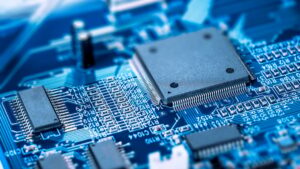
Chip on motherbord
Frage: Und das hat ASML getan?
Antwort: Ja. ASML hat unter extrem schwierigen Bedingungen bewiesen, dass dies eine erfolgreiche Strategie sein kann.
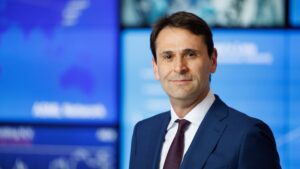
Christophe Fouquet – derzeit Vorstandsvorsitzender (CEO) der ASML
Frage: Wie beurteilen und analysieren Sie die gegenwärtige Situation auf dem Halbleitermarkt?
Antwort: Ich schreibe seit 1990 über die Halbleiterindustrie und habe bereits viele überhitzte Chipmärkte erlebt. Immer wieder sagten die meisten Analysten und Marktforscher: „Diesmal ist es anders, jetzt geht es nur noch nach oben.“ Doch stets folgte ein tiefes Tal.
Für mich fühlt es sich jetzt wieder genauso an. Die durch künstliche Intelligenz ausgelöste Nachfrage nach Chips ist so enorm, dass es scheint, als könne nichts schiefgehen. Trotzdem habe ich dabei ein ungutes Gefühl.
Frage: Warum?
Antwort: Auf die Hypes im Halbleitermarkt sind immer tiefe Täler gefolgt.
Frage: Die Chinesen arbeiten fieberhaft daran, die „älteren“ Chipmaschinen von ASML des Typs DUV zu kopieren und nachzubauen, DUV steht für Deep Ultraviolet. Wird ASML seine Weltmarktführerschaft beim Bau von Chipmaschinen für die Halbleiterindustrie auch künftig behaupten können?
Antwort: Als Europäer mache ich mir keine Sorgen darüber, dass die Chinesen DUV-Maschinen nachbauen. Wenn ihnen das gelingt, können sie bestenfalls zu ASML aufschließen. Das wird ASML seinerseits motivieren, auch im Bereich DUV weiter zu innovieren.
China
Worüber ich mir allerdings Sorgen mache, ist, dass der Westen China von moderner Produktionstechnologie abgeschnitten hat. Dadurch sind die Chinesen nun hochmotiviert, die Chipproduktion neu zu erfinden. Ich glaube, dass ihnen das gelingen wird.
Das kann dadurch geschehen, dass sie einen anderen Weg einschlagen. Die ganze Welt denkt, dass Transistoren immer kleiner werden müssen, um die Leistungsfähigkeit zu verbessern. Aber das ist nicht der einzige Weg.
Man kann Chips auch verbessern, indem man Transistoren dichter zusammenpackt oder Chips intelligent verpackt. Die Chinesen entwickeln derzeit solche alternativen Technologien.
Außerdem erwarte ich, dass sie auf E-Beam, eine andere Methode der Lithografie, setzen werden. Damit werden sie aller Wahrscheinlichkeit nach deutlich früher Chips produzieren können als mit ihren EUV-Bemühungen.
Für beide Technologien gilt allerdings: Es bleibt abzuwarten, zu welchen Kosten sie ihre Produkte anbieten können.
Frage: Für die neuesten EUV-Chipmaschinen von ASML gilt ein Exportverbot nach China. China verfügt noch nicht über diese Technologie, will sie aber unbedingt haben. Können chinesische Ingenieure schon bald auch die neuesten ASML-Maschinen der EUV-Generation kopieren?
Antwort: Sicher nicht so schnell. Bislang habe ich nur gehört, dass es in China mit EUV nicht wirklich vorangeht. Die Komplexität dieser Technologie ist kaum vorstellbar.
Einzelne Komponenten können sicherlich hergestellt werden, auch wenn die EUV-Lichtquelle, die Spiegel, die Waferstages und die Wafertische außerordentlich komplex sind. Außerdem muss die gesamte Infrastruktur vorhanden sein.
Und selbst wenn all diese Voraussetzungen erfüllt sind, ist es noch ein gewaltiger Schritt, das komplette System tatsächlich zum Laufen zu bringen.
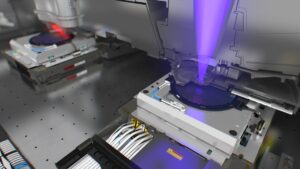
Chipherstellerung mit ASML-Halbleitermaschinen
Frage: Ist ASML gut vorbereitet und ausreichend gegen chinesische Spionageangriffe geschützt?
Antwort: Das kann ich nicht beurteilen. Ich weiß lediglich, dass ASML sowohl mit seinen Kunden als auch mit seinen Zulieferern eng im Bereich der Cybersicherheit zusammenarbeitet.
Frage: ASML hat kürzlich eine weitere Intensivierung der Zusammenarbeit mit Samsung, TSMC, der Taiwan Semiconductor Manufacturing Company, und Intel angekündigt. Was erwarten Sie davon?
Antwort: Diese Zusammenarbeit ist völlig anders geartet als die von 2012. Damals beteiligten sich Intel, TSMC und Samsung an ASML. Außerdem beteiligten sie sich mit Barzahlungen an der Entwicklung der EUV-Technologie und von 450-Millimeter-Wafern. Letzteres wurde bereits nach einem Jahr wieder eingestellt.
Nun geht es um eine Zusammenarbeit, mit der die Industrie auf eine neue Generation von High-NA-EUV-Maschinen vorbereitet wird, die größere Masken verarbeiten können.
Wenn dies gelingt, bedeutet das einen erheblichen Produktivitätssprung und damit eine Senkung der Kosten. Ich denke, dass ASML damit seine High-NA-EUV-Investition endgültig absichert.
Frage: Es gibt den Konflikt zwischen China und Taiwan. Obwohl das demokratische Taiwan nie Teil der kommunistisch und diktatorisch regierten Volksrepublik China gewesen ist, erhebt Peking Anspruch auf die Insel. Ist ein chinesischer Angriff auf Taiwan möglich?
Und was würde das für TSMC, die Halbleiterindustrie und die Weltwirtschaft bedeuten?
Antwort: Die Entwicklungen in Taiwan sind gleichzeitig beunruhigend und faszinierend. Die Amerikaner bezeichnen die Insel abwertend als „a rock in the ocean“. Doch alle großen Namen im Bereich KI, Computer und mobile Kommunikation sind von TSMC abhängig.
Taiwan Semiconductor Manufacturing Company TSMC, der führende Halbleiter-Hersteller in der Welt
Die Vereinigten Staaten zwingen Samsung und TSMC zwar, in Produktionskapazitäten in Amerika zu investieren. Doch diese Kapazitäten sind noch nicht mit denen in Taiwan vergleichbar.
Die große Frage lautet deshalb: Was würden die Vereinigten Staaten tun, wenn China mit einem Angriff auf Taiwan die Lieferung von Chips unterbrechen würde, von denen Nvidia, AMD, Apple, Qualcomm, Broadcom und deren Kunden – die Hyperscaler – abhängig sind?
China würde mit einem solchen Angriff sofort die gesamte Weltwirtschaft und auch die eigene Wirtschaft lahmlegen. Deshalb halte ich ein solches Szenario für äußerst unwahrscheinlich.
China wird daher eine „gewaltlose“ Wiedervereinigung anstreben, mit allen Druckmitteln über die Peking verfügt.
Als ich in diesem Frühjahr einige Wochen in Taiwan war, hörte ich von vielen Menschen dort, dass sie eine endgültige „Wiedervereinigung“ mit China für nahezu unvermeidlich halten.
Hongkong zeigt, dass dies das Ende der Demokratie in Taiwan bedeuten würde. Offenbar sind viele Taiwaner jedoch bereit, dieses Risiko notfalls einzugehen.
Frage: Ich kenne Taiwan sehr gut. Ich teile diese Einschätzung des China-Taiwan-Konflikts und einer möglichen „Wiedervereinigung“ nicht. Die Mehrheit der Taiwaner möchte den Status quo bewahren. Die meisten Taiwaner, insbesondere die jungen Menschen, sagen heute: „Wir sind keine Chinesen. Wir sind Taiwaner.“ Aber das ist ein anderes Thema.
Was fasziniert Sie besonders an ASML?
Antwort: Nicht die Technologie, sondern die Menschen: die Unternehmenskultur, die es ASML ermöglicht hat, die komplexesten Maschinen der Welt zu bauen.
Tatsächlich ist das Unternehmen der Konkurrenz damit bereits seit 30 Jahren voraus. Ich betrachte die vergangenen drei Jahrzehnte als einen Höhepunkt im Zeitalter der Industriellen Revolution.
So wie die Dampfmaschine und die Elektrifizierung hat auch die heutige Chip- und Lithografietechnologie historische Bedeutung.
Das Besondere, ja sogar Bizarre daran ist, dass nur ein einziges Unternehmen die Basistechnologie dafür liefert. Ein solches Monopol hat es in früheren Phasen der Industriellen Revolution nicht gegeben.
ASML ist dies bisher gelungen, weil das Unternehmen sehr gut auf seine Kunden hörte und gleichzeitig ausgesprochen eigenwillig war. ASML war bereit, eigene wichtige Entscheidungen zu treffen.
Deshalb ist ASML für mich der ultimative Business Case. Das Unternehmen hat der Welt ermöglicht, Produkte wie das i-Phone und Technologien wie die künstliche Intelligenz zu entwickeln.
Faszinierend ist auch, dass dies durch eine Kombination mit harten Auseinandersetzungen und einer stark ausgeprägten Review-Kultur erreicht wurde.
Gleichzeitig herrschten ein hohes Maß an Empathie und eine nahezu grenzenlose Loyalität gegenüber den Mitarbeitern. Sie erhielten außerdem viel Freiheit. All dies geschah in dem Zeitraum, den ich in meinem Buch beschreibe.
Die ASML Aktie
Frage: Sind ASML-Aktien bei dem aktuellen Börsenkurs von rund 1400 Euro und einem Kurs-Gewinn-Verhältnis (KGV) von 52 noch ein Kauf?
Antwort: Ich habe mein Aktienpaket von ASML verkauft, als ich 1999 mit Bits&Chips begann. Seitdem habe ich privat nie wieder Technologieaktien gekauft. Theoretisch hätte ich Multimillionär sein können, während mich Bits&Chips nur Geld gekostet hat. Die Erfahrung und die Freude an der Zeitschrift hätte ich allerdings um kein Geld der Welt missen wollen. Ich würde heute keine ASML-Aktien kaufen.
Frage: Und was die KI betrifft: Ist die Künstliche Intelligenz ein Fluch oder ein Segen?
Antwort: Meiner Ansicht nach haben Cambridge Analytica und Facebook in erheblichem Maße beispielsweise zum Brexit-Votum und zum Aufstieg des weltweiten Populismus beigetragen. KI wird soziale Medien in einem bislang ungekannten Ausmaß intelligenter und manipulativer machen. Gerade wegen der gesellschaftlichen Aufsplitterung, die dadurch entstehen kann, mache ich mir die größten Sorgen.
Frage: Herzlichen Dank für dieses Gespräch.
Zur Person

Foto: René Raaijmakers, Copyright by Bits&Chips. Er gründete und ist Herausgeber von „Bits&Chips“
René Raaijmakers (1960) ist ein niederländischer Technologiejournalist, Autor, Verleger und Hightech-Experte. Der ausgebildete Festkörperchemiker wechselte 1989 in den Journalismus und gründete 1999 das Fachmedium Bits&Chips.
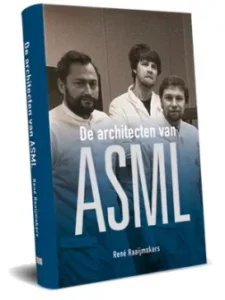
Sein 2017 erschienenes Buch „De Architecten van ASML“ ist eine detaillierte Chronik der frühen Entwicklung von ASML, das heute weltweit führend beim Bau von Chipmaschinen für die Halbleiterindustrie ist.
Raaijmakers arbeitet als Journalist, Autor und Verleger. Sein Spezialgebiet: Halbleitertechnologie und Lithografie. Sein zweites Buch über ASML soll voraussichtlich im kommenden Jahr erscheinen.
Das erste Buch von René Raaijmakers, Gründer von Bits&Chips, über ASML
Links:
https://bits-chips.com/featured-author/rene-raaijmakers/?utm_source=chatgpt.com
https://www.youtube.com/@HMHetzelMedia
English Version:
HM-HETZELMEDIA
By: H. HETZEL, The Hague
Date: 25 September 2026
Netherlands/China/Taiwan/ASML
“ASML is a New High Point of the Industrial Revolution”
Without ASML, there would be no iPhone and no artificial intelligence (AI)
“The Chinese want to reinvent chip production”
HM-Interview with ASML and semiconductor expert René Raaijmakers
By HELMUT HETZEL
The Hague. The Dutch chip-machine manufacturer ASML is currently the subject of discussion everywhere. The company plays a key role in the development of chips for artificial intelligence (AI). Even King Willem-Alexander spoke about ASML in this year’s Speech from the Throne. The King said: “We need more companies like ASML.”
ASML, the manufacturer of photolithography systems for the semiconductor industry, is currently one of Europe’s most valuable and innovative companies, with a share price of around €1,400 and a market capitalization of approximately €540 billion. Without ASML, there would be no iPhone and no artificial intelligence (AI).
HM-Editor in Chief Helmut Hetzel spoke with semiconductor and ASML expert René Raaijmakers about the future of ASML and the semiconductor industry.
Question: Mr. Raaijmakers, your first book, De Architecten van ASML (The Architects of ASML), was published in 2017. In it, you describe the history of ASML’s development into today’s global market leader in photolithography systems for semiconductor manufacturing. ASML is at the top of the global market. Your second book about ASML is due to appear soon. When will it be published, and what is its central message?
Answer: The sequel to De Architecten van ASML covers the period from 1996 to approximately 2022. It describes how the lithography company became the market leader and subsequently a monopolist.
In order to continually improve lithography technology for chips, ASML had to master highly complex cooperation, develop new inventions, work intensively both internally and externally, and involve partners in the process. At the same time, the company had to convince the entire world that EUV lithography was the right path for the future of semiconductor manufacturing.
Because in order to manufacture chips using EUV technology — EUV stands for Extreme Ultraviolet — the entire industry had to adapt. Many companies did not want to do that. They were satisfied with the existing situation.
The central message that, in my opinion, can be derived from this is: Believe in yourself. And once you have made a decision, stick to it consistently, even when you are confronted with major setbacks and obstacles.
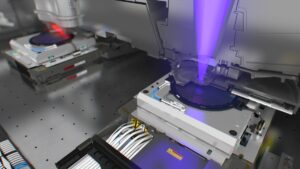
ASML lithography technology
Question: And that is what ASML did?
Answer: Yes. Under extremely difficult conditions, ASML demonstrated that this can be a successful strategy.
Question: How do you assess and analyze the current situation in the semiconductor market?
Answer: I have been writing about the semiconductor industry since 1990 and have already experienced many overheated chip markets. Again and again, most analysts and market researchers said: “This time it is different; from now on, it will only go up.” Yet a deep valley always followed.
For me, it feels the same again now. The demand for chips generated by artificial intelligence is so enormous that it seems as if nothing can go wrong. Nevertheless, I have an uneasy feeling about it.
Question: Why?
Answer: Hype in the semiconductor market has always been followed by deep downturns.
Question: The Chinese are working feverishly to copy and reproduce ASML’s “older” DUV chip machines. DUV stands for Deep Ultraviolet. Will ASML also be able to maintain its global leadership in chip-machine manufacturing for the semiconductor industry in the future?
Answer: As a European, I am not worried about the Chinese copying DUV machines. If they succeed, at best they can catch up with ASML. That, in turn, will motivate ASML to continue innovating in the DUV field.
What does concern me, however, is that the West has cut China off from modern production technology. As a result, the Chinese are now highly motivated to reinvent chip production. I believe they will succeed.
They could do so by taking a different path. The whole world thinks that transistors always have to become smaller in order to improve performance. But that is not the only way.
You can also improve chips by packing transistors more densely or by packaging chips intelligently. The Chinese are currently developing such alternative technologies.
I also expect them to rely on E-beam, another lithography method. In all likelihood, this will enable them to produce chips significantly earlier than through their EUV efforts.
ASML chip on motherboard
For both technologies, however, one question remains: at what cost will they be able to offer their products?
Question: ASML’s latest EUV chip machines are subject to an export ban to China. China does not yet have this technology but desperately wants it. Will Chinese engineers soon also be able to copy ASML’s latest generation of EUV machines?
Answer: Certainly not that quickly. So far, I have only heard that China is not really making progress with EUV. The complexity of this technology is almost unimaginable.
Individual components can certainly be manufactured, even though the EUV light source, the mirrors, the wafer stages and wafer tables are extraordinarily complex. In addition, the entire infrastructure has to be in place.
And even if all these requirements are met, it is still an enormous step to actually get the complete system up and running.
Question: Is ASML well prepared and sufficiently protected against Chinese espionage attacks?
Answer: I cannot assess that. All I know is that ASML works closely with both its customers and suppliers in the field of cybersecurity.
Question: ASML recently announced a further intensification of cooperation with Samsung, TSMC — Taiwan Semiconductor Manufacturing Company — and Intel. What do you expect from this?
Answer: This cooperation is fundamentally different from that of 2012. At that time, Intel, TSMC and Samsung took stakes in ASML. They also made cash contributions to the development of EUV technology and 450-millimeter wafers. The latter was discontinued after just one year.
Now the aim is to prepare the industry for a new generation of High-NA EUV machines capable of processing larger masks. If this succeeds, it will mean a significant increase in productivity and therefore lower costs. I think this will ultimately secure ASML’s High-NA EUV investment.
Question: There is the conflict between China and Taiwan. Although democratic Taiwan has never been part of the communist and authoritarian People’s Republic of China, Beijing claims sovereignty over the island. Is a Chinese attack on Taiwan possible?
And what would that mean for TSMC, the semiconductor industry and the global economy?
Taiwan Semiconductor Manufacturing Company TSMC – the leading chipmaker in the world
Answer: Developments in Taiwan are both worrying and fascinating. The Americans disparagingly refer to the island as “a rock in the ocean.” Yet all the major names in AI, computing and mobile communications depend on TSMC.
The United States is forcing Samsung and TSMC to invest in production capacity in America. But those capacities are still not comparable with those in Taiwan.
The big question, therefore, is: What would the United States do if China were to interrupt the supply of chips through an attack on Taiwan — chips on which Nvidia, AMD, Apple, Qualcomm, Broadcom and their customers, the hyperscalers, depend?
China would immediately paralyze the entire global economy — and its own economy as well — through such an attack. That is why I consider such a scenario extremely unlikely.
China will therefore pursue a “non-violent” reunification, using all the means of pressure at Beijing’s disposal.
When I spent several weeks in Taiwan this spring, I heard from many people there that they considered a final “reunification” with China almost inevitable.
Hong Kong shows that this would mean the end of democracy in Taiwan. Apparently, however, many Taiwanese are prepared to take that risk if necessary.
Question: I know Taiwan very well. I do not share this assessment of the China-Taiwan conflict and a possible “reunification.” The majority of Taiwanese want to preserve the status quo. Most Taiwanese, especially young people, say today: “We are not Chinese. We are Taiwanese.” But that is another subject.
What fascinates you most about ASML?
Answer: Not the technology, but the people: the corporate culture that enabled ASML to build the most complex machines in the world.
In fact, the company has been ahead of its competitors for 30 years. I regard the past three decades as a high point in the age of the Industrial Revolution.
Just as the steam engine and electrification did, today’s chip and lithography technology has historical significance.
What is remarkable — even bizarre — is that only one company supplies the underlying technology. Such a monopoly did not exist in earlier phases of the Industrial Revolution.
ASML has succeeded so far because the company listened very carefully to its customers while at the same time being highly headstrong. ASML was prepared to make its own important decisions.
That is why ASML is the ultimate business case for me. The company has enabled the world to develop products such as the iPhone and technologies such as artificial intelligence.
It is also fascinating that this was achieved through a combination of tough confrontations and a strongly developed review culture.
At the same time, there was a high degree of empathy and an almost limitless loyalty toward employees. They were also given a great deal of freedom. All of this took place during the period covered in my book.
ASML-Shares
Question: With ASML currently trading at around €1,400 and at a price-to-earnings ratio (P/E) of 52, is the stock still a buy?
Answer: I sold my ASML shares when I started Bits&Chips in 1999. Since then, I have never bought technology stocks privately again.
In theory, I could have become a multimillionaire, while Bits&Chips has only cost me money. But I would not have missed the experience and the pleasure of publishing the magazine for any amount of money.
I would not buy ASML shares today.
Question: And what about AI: Is artificial intelligence a curse or a blessing?
Answer: In my view, Cambridge Analytica and Facebook, for example, contributed significantly to the Brexit vote and the rise of global populism. AI will make social media more intelligent and more manipulative on an unprecedented scale.
It is precisely because of the social fragmentation this could cause that I am most concerned.
Question: Thank you very much for this interview.
About René Raaijmakers
Photo: René Raaijmakers, founder and editor of Bits&Chips Copyright by Bits&Chips
René Raaijmakers (1960) is a Dutch technology journalist, author, publisher and high-tech expert. A trained solid-state chemist, he moved into journalism in 1989 and founded the specialist publication Bits&Chips in 1999.
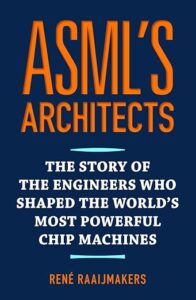
His 2017 book De Architecten van ASML (The Architects of ASML) is a detailed chronicle of ASML’s early development. Today, ASML is the world’s leading manufacturer of chip-making machines for the semiconductor industry.
Raaijmakers works as a journalist, author and publisher. His specialist fields are semiconductor technology and lithography. His second book about ASML is expected to be published next year.
The first book of René Raaijmakers, founder of Bits&Chips, about ASML
Links:
https://bits-chips.com/featured-author/rene-raaijmakers/?utm_source=chatgpt.com
https://www.youtube.com/@HMHetzelMedia
„Changing the world, nanometer by nanometer
ASML enables the world’s leading chipmakers to produce the microchips that power today’s world.“
/ Textende / Copyright © by HELMUT HETZEL / Den Haag